Why Fall Is the Best Time to Seal Your Concrete in Central NY
Every spring we get the same calls. A driveway that was fine in October is flaking in April. A stamped patio that looked great two summers ago has gone chalky and gray. Nine times out of ten, the concrete went into winter unsealed, and winter did what it does.
What winter actually does to concrete here
Concrete is porous. Rain and snowmelt soak into the top layer. When the temperature drops below freezing, that water expands, and over a few dozen freeze-thaw cycles it pops the surface off in small flakes. That's spalling. Add road salt and ice melt, which pull more moisture into the surface and attack it chemically, and driveways and garage aprons are usually the first to go.
What sealer does
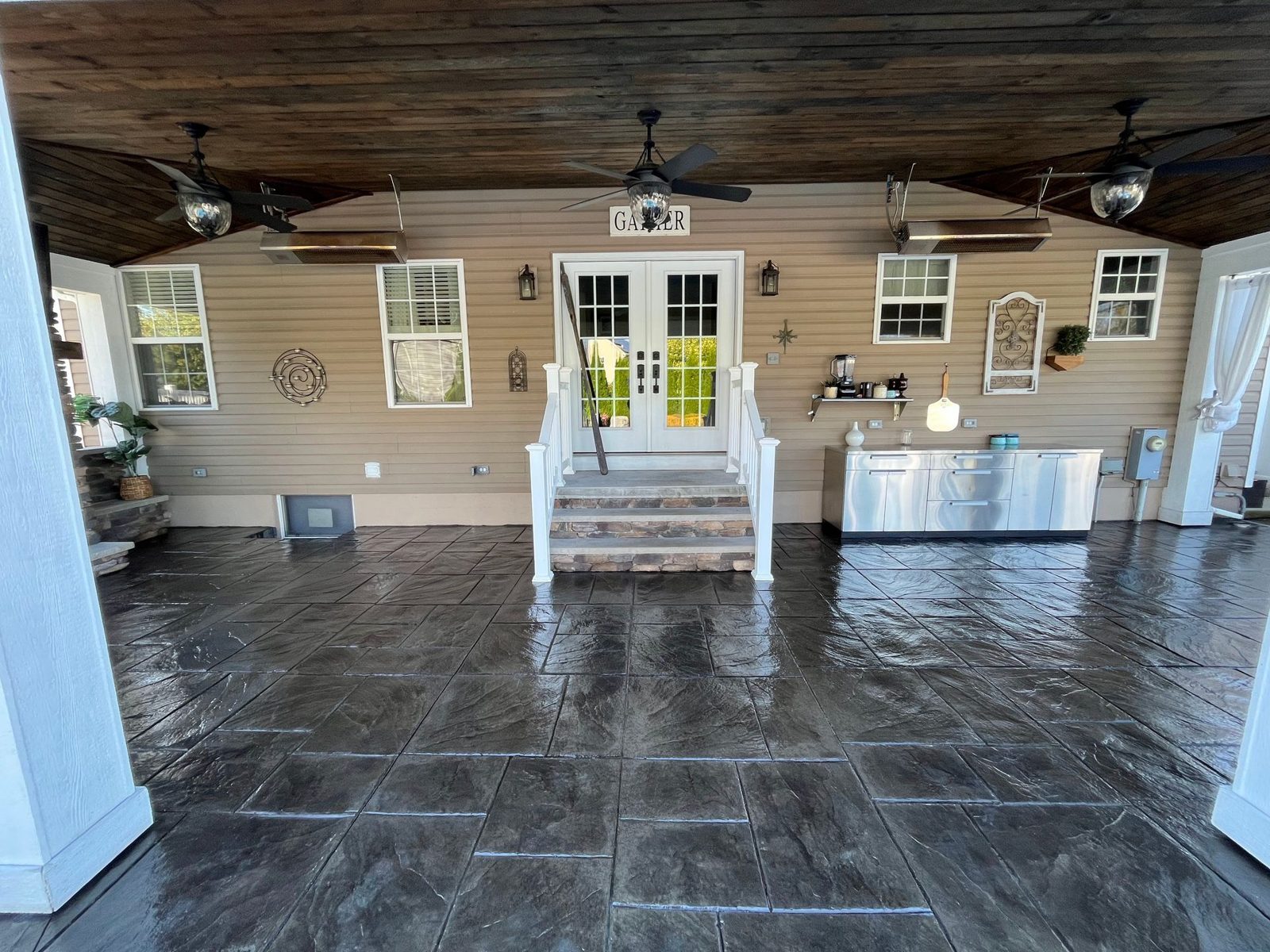
A good sealer fills the pores at the surface so water beads and runs off instead of soaking in, and salt stays on top where it rinses away. On stamped and decorative concrete it does a second job: it brings the color back up and slows the UV fading that turns a terra cotta patio into a pale pink one. We use a solvent-based sealer because it bonds and lasts better in this climate than the water-based products on the hardware store shelf.
Why fall, specifically
Sealer needs two things to cure properly: a dry surface and daytime temperatures in the 50s or warmer. In Central New York that describes late September through October almost perfectly. Spring is wet and unpredictable; summer is fine but the schedule is full of pours. Fall gives us dry days, stable temperatures, and gets your concrete protected before the first salt truck goes by.
One caveat: brand-new concrete should cure about a month before it's sealed. If we poured your patio in late September, we'll be back for the sealer in late October or the following spring.
How often should concrete be resealed?
Seal new concrete after its first winter, then every 2 to 5 years. Driveways and pool decks are on the short end of that; a covered patio can stretch longer. The easy test is to watch the surface after a rain. If water beads up, the sealer is still working. If it soaks in and darkens the concrete, it's time.
Get on the fall schedule
We clean and seal concrete across Syracuse and the surrounding towns, including concrete we didn't pour. The fall sealing calendar fills fast once the first cold snap reminds everyone. Schedule a visit online or call (315) 676-0005, and read more on our sealing page or the care guide.