
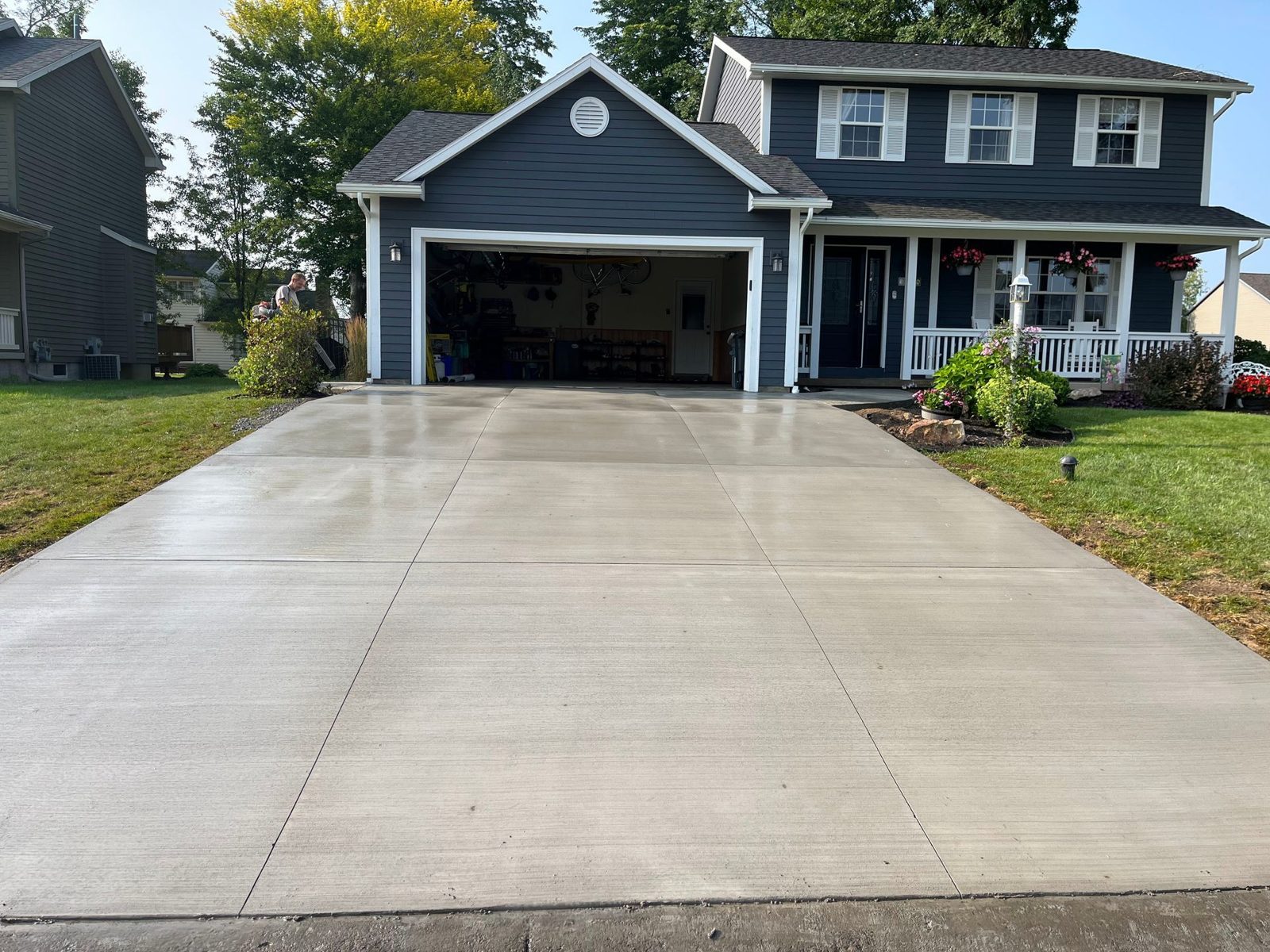
How to Care for Broom Finished Concrete & Floors
Driveways, walkways, aprons, pads and floors: what to do in the first month, how to get through the first winter, and how to keep salt out of the surface for good.
Care guides: Stamped concrete · Broom finished & floors · After a reseal · All guides
What to Expect
- Some color variation and a mottled look are normal on new concrete and even out over the first few weeks as it cures. A white, powdery film (efflorescence) can show up on new concrete; it brushes or rinses off and is not a defect.
- Hairline cracks are normal in concrete, and control joints are cut to guide where they form.
The First Days After Installation
- Foot traffic: wait at least 24 hours.
- Furniture: wait at least 72 hours.
- Hot tubs, sheds, and other heavy items: wait at least 7 days (28 days preferred).
- Cars: wait at least 7 days. Heavy vehicles (trucks, RVs, trailers, dumpsters, equipment): wait 30 days. Allow extra time in cool weather.
- For the first few weeks, avoid turning your steering wheel while your car is stopped on the concrete.
- Concrete takes about 30 days to fully cure, sometimes longer depending on moisture and weather.
Winter Care
- NEVER use ice melt on concrete that is less than 12 months old. Sand is always the best choice for traction.
- After 12 months, if ice melt is absolutely necessary, use Safe Step Mag Chloride 8300 only. Use about 1/4 cup per square yard, spread evenly, and don't pile it up. Never use rock salt, calcium chloride, or any melt containing ammonium.
- Road salt drips off cars onto driveways, garage aprons, and garage floors. Rinse these areas when temperatures allow, and give everything a good rinse in the spring.
- Use plastic shovels only. No metal or metal-edged shovels, and no metal ice choppers.
- Raise snowblower skid shoes or switch to poly skid shoes, and don't drag equipment on the surface. If you use a plow service, ask them to use a poly or rubber blade edge.
Everyday Care
- Do not drag furniture across the surface. Use hard nylon glides on furniture legs.
- Avoid rubber feet, rubber-backed mats, and flowerpots sitting directly on the surface; they trap water and leave marks. Use pot feet and move items occasionally.
- Rust stains concrete. Keep bare metal off the surface, and sweep up fertilizer granules right away (most fertilizer contains iron).
- Clean up oil, gas, antifreeze, and solvent spills quickly. Fresh concrete is porous and stains easily.
- Never set a fire pit directly on the concrete; use a raised stand. Use a grill mat and lift it periodically.
- Adjust sprinklers so they don't spray the concrete, and clear wet leaves in the fall to prevent staining.
- Garage, barn, and shop floors: wipe up vehicle fluids when you see them, and don't drag steel, jack stands, or equipment across the floor. Put a pad or plywood under heavy point loads.
Sealer
Broom finished concrete doesn't need the glossy, film-forming sealer we use on stamped work, but we strongly recommend a penetrating sealer on any concrete that sees road salt or de-icer: driveways, garage aprons and floors, and walkways.
A penetrating sealer soaks into the surface rather than sitting on top, so it doesn't change the look or make the concrete slippery. It keeps water and salt out of the surface, which is what causes flaking and pitting over our winters.
Apply it once the concrete has cured. It lasts for years; we'll recommend a reapplication schedule based on your exposure. Call the office for an estimate, or for product and application instructions if you'd rather do it yourself.
Cleaning
- Pressure wash gently: a wide fan tip (25 or 40 degree), and the wand at least 12 inches from the surface. Never use a turbo or 0-degree tip.
- No pressure washer? Use diluted Simple Green and a stiff-bristle brush, then rinse with a garden hose.
- For oil spots on a garage floor, use a concrete degreaser and a stiff brush, then rinse.
- Never use muriatic acid or harsh solvents.
Any questions? Feel free to reach out.
Questions about something specific on your concrete? Send a photo to distinctivestoneandconcrete@gmail.com or call (315) 676-0005 and we'll tell you what you're looking at.